As Latitude Increases the Intensity of Solar Energy
Again the intensity will depend on the angle it makes with the sun and so it depends on your location on earth ie. What happens to the intensity of solar energy as latitude increases.
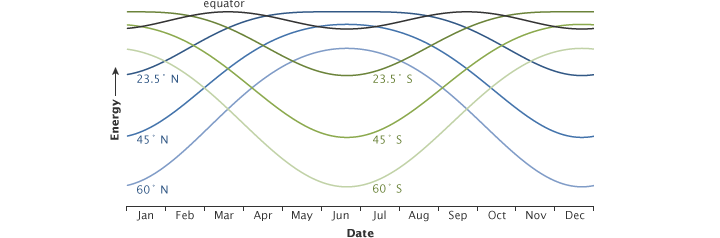
Climate And Earth S Energy Budget
Advertisement dodododo123 dodododo123 Answer.
. Tapusin mo po yan iyot po tayo mamaya. How Does Latitude Affect Sunlight Intensity. The highest latitudes get the least.
As the latitude increases the angle of the inclination will get change. We get almost as much solar energy as they receive at the Equator. Therefore as the latitude increases the intensity of solar energy decreases.
Why do the polar zones have cold temperatures year-round. Energy from sunlight is not spread evenly over Earth. To be more specific at the latitude where we are located we receive almost the most energy that any community can receive in the globe.
As latitude increases the intensity of solar energy decreases. As latitude increases what happens to the average intensity of solar energy. The intensity of solar energy decreases as latitude increases which region is located between 235 degrees north and south of.
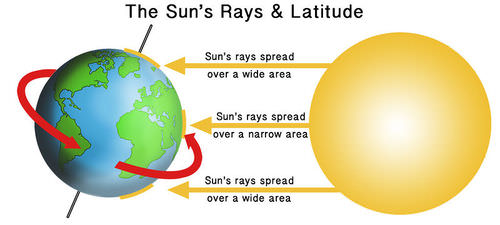
From the equator to the poles the Sun rays meet Earth at smaller and smaller angles and the light gets spread over larger and larger surface. What happens to the intensity of solar energy as latitude increases. This is because the same amount of energy is distributed over a larger area wavelength increases so fringe spacing also increases.
As latitude increases the sun shines more obliquely and provides less warming energy. Get 1-on-1 help from an expert tutor now. What happens to the intensity of solar energy as latitude increases.
The higher the elevation the colder the air and therefore the colder the climate. How To Calculate Accelerated Depreciation For Solar After the first year the solar array will experience accelerated depreciation meaning it will. Solar intensity varies with the latitude or location of Earth which is differentiated by Earths Axis creating different temperatures in both of the hemispheres.
As latitude increases the intensity of the solar energy that strikes an area decreases and climates become cooler. As latitude increases the intensity of solar energy decreases. Warm summers and cold winters.
The difference in solar energy received at different latitudes drives atmospheric circulation. Sun light falls almost vertically in equator. But as latitude increases the angle of inclination change and so same light is spread on large areaSo intensity reduces.
As latitude increases the intensity of the solar energy that strikes an area decreases and climates become cooler. Bolivianouft and 8 more users found this answer helpful. The intensity will get reduced on the latitude.
The higher the elevation the colder the air and therefore the colder the climate. - 13539480 Nikkavisaya25 Nikkavisaya25 19042021 Science. In this way how do the angle and intensity of insolation change as latitude increases.
One hemisphere is always dark receiving no solar radiation at all. You just studied 8 terms. The lowest latitudes get the most energy from the Sun.
What zone is between 235 north and south of the equator. The Sun rays will spread over a large area. How does the latitude affect the amount of solar energy received in an area.
The more focused the rays are the more energy an area receives and the warmer it is. Florianmanteyw and 7 more users found this answer helpful. Temperate zones have what types of summers and what types of winters.
New questions in Science. Latitudes around the equator will receive more sunlight because their angle is closer to perpendicular. Because of how the Earth rotates around the sun with a tilted axis different.
But as latitude increases the angle of inclination change and so same light is spread on large areaSo intensity reduces. What are conditions like on the leeward side of the mountain. When the suns rays strike Earths surface near the equator the incoming solar radiation is more direct nearly perpendicular or closer to a 90 angle.
At higher latitudes the angle of solar radiation is smaller causing energy to be spread over a larger area of the surface and cooler temperatures. What happens to solar intensity as latitude increases. Energy per unit area decreases and this is why intensity.
On the daylight side only the point directly under the Sun receives full-intensity solar radiation. Up to 24 cash back Solar Intensity. Sun light falls almost vertically in equator.
As the latitude increases the intensity of solar energy decreases. But as latitude increases the angle of inclination change and so same light is spread on large area. S un light almost vertically in equator.
Because the suns rays strike at a smaller angle. What happens to the intensity of solar energy as latitude increases The process by which water vapor changes directly into a solid is called When air pressure increases the mercury in the tube of. Solar intensity describes the sun in relation to latitude of how the suns solar angular ray hits the surface of Earth.
The equator always faces the sun directly so the climate is warm year-round with the average day and night temperature hovering between 125 and 143 degrees Celsius 545 and 577 degrees Fahrenheit. Solar Energy and latitude.

How Do Solar Panels Work Solar Energy Diagram
Solar Energy And Latitude Ck 12 Foundation
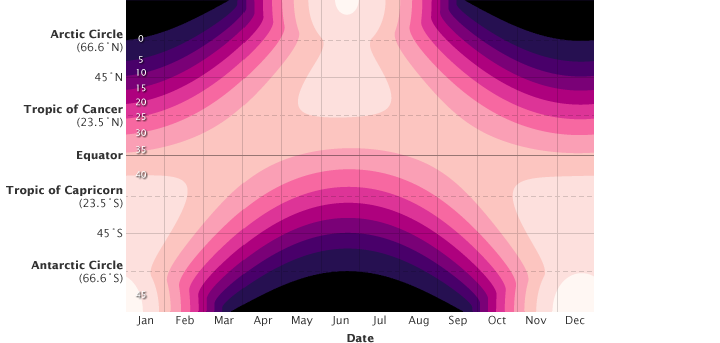
Climate And Earth S Energy Budget

Comments
Post a Comment